Stress and psychosomatic symptoms

Tension and stress can go hand in hand with physical symptoms, such as tense muscles, pain, tiredness or difficulty relaxing. Physical and psychological factors can influence one another. Your symptoms are real, even if no clear cause can be identified straight away.

If you’ve been pushing yourself hard for a long time, it can become increasingly difficult to relax. Perhaps you carry on even when you’re tired, or you’re no longer sure what gives you energy. You don’t need to be able to explain exactly what’s going on straight away: we’ll take the time to discuss your questions and experiences together.

Physical and psychological

The symptoms listed below may occur as a result of stress, but may also have other causes. You should therefore not attribute any new or changing symptoms to stress without first seeking medical advice. Discuss them with your GP.

A woman is looking at a note, with her hand against her forehead.

Psychological complaints

  • Listlessness
  • Sleeping badly or sleeping too much
  • Feeling anxious or insecure
  • Difficulty concentrating
  • Frequent gloom and constant fretting
  • Being irritable, restless or agitated
  • Unable to enjoy and relax anymore

Physical complaints

  • Chest pressure or palpitations
  • Extreme fatigue
  • Not being able to relax
  • Muscle and joint pain that cannot be explained
  • Stomach, bowel or abdominal complaints that cannot be explained
  • Shortness of breath and difficulty breathing
  • Headache, neck pain or backache
  • Pelvic complaints

If you’re unable to reduce your stress levels, if your anxiety or low mood is getting worse, or if your day-to-day functioning is deteriorating, please contact your GP. At FRISKFYSIO Amstelveen, we’ll discuss whether guidance on exercise and relaxation is suitable for your situation.

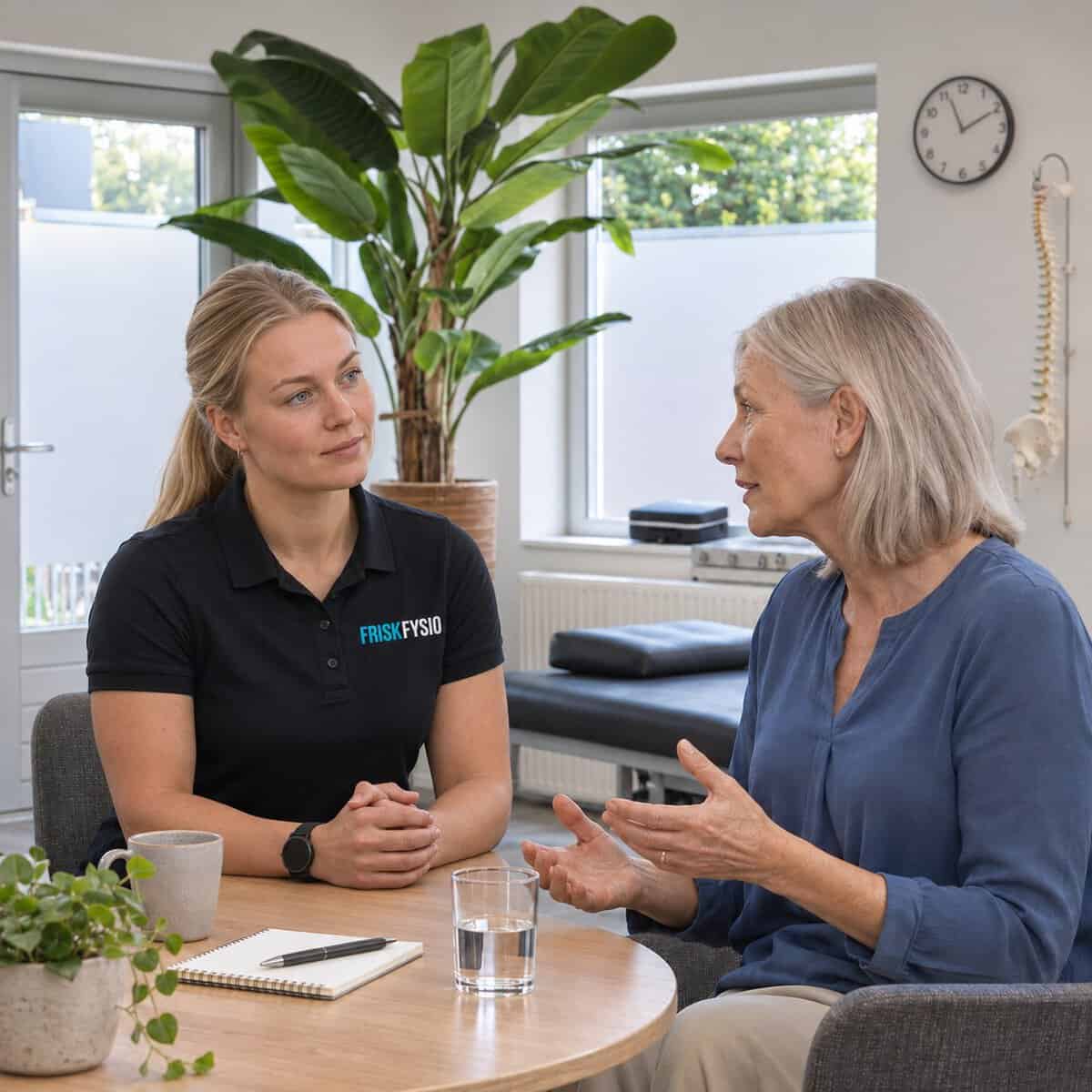
AI illustration: an attentive conversation between a physiotherapist and a client.

How can FRISKFYSIO Amstelveen help you with stress-related symptoms?

During your first appointment, we will discuss your symptoms, your daily activities and what you would like to be able to do again. We will assess your range of movement and decide together whether physiotherapy is appropriate. If necessary, we will advise you to contact your GP or another healthcare professional.

Together, we’ll draw up a treatment plan and review your progress. You’ll receive your personalised exercises to do at home via our own FRISK App. See also the information on coping with stress on Thuisarts.nl.

Time for recovery in your day

Relaxation means something different to everyone. Some people find peace of mind whilst going for a walk, others through music, a hobby or gentle exercise. Small, achievable moments often fit more easily into your day than a sudden, major change.

  • Identify what drains your energy and what helps you relax.
  • Make sure you allow time for breaks and maintain a regular sleep pattern.
  • Choose a form of exercise that you enjoy.
  • Discuss any concerns with someone you trust and seek help in good time.

Learning to be more in tune with your body

During the sessions, we can focus on recognising tension, moving in a relaxed way, and balancing activity with rest. We’ll discuss what works best for you and how you can practise this in your daily life.

You don’t have to change everything at once. Together, we’ll choose a specific area to focus on, discuss your experiences and adjust our approach. If you need any other support, we’ll discuss this with you. Your GP can also help you find suitable support.

You can read more practical information at Thuisarts.nl on relaxation.

APPOINTMENTS AND CONTACT DETAILS

An appointment at FRISKFYSIO Amstelveen

Do you have any questions about support for psychosomatic symptoms, or would you like to make an appointment? Please contact our team or use the online booking tool.

QUESTIONS ABOUT YOUR TREATMENT

Frequently asked questions about stress-related symptoms

Click on a question to read the answer.

Stress and physical symptoms can influence one another. However, symptoms such as pain, tiredness and difficulty relaxing may also have other causes. Do not attribute new or changing symptoms to stress without first seeking medical advice; discuss them with your GP.

Please contact your GP if your symptoms worsen, you become increasingly anxious or depressed, or your ability to carry out daily activities deteriorates. Call 112 if you experience chest pain or severe chest tightness that persists even at rest, possibly accompanied by sweating or nausea. Call your GP or the GP out-of-hours service immediately if you have difficulty breathing or persistent, very rapid heart palpitations.

We will discuss your symptoms, your daily activities and what you would like to be able to do again. The physiotherapist will assess your movement and discuss with you what kind of treatment is appropriate. Please bring any relevant information from your treating doctor.

A physiotherapist from our team will discuss with you which support is best suited to your situation. Please get in touch if you would like to discuss in advance which appointment would be suitable.

You will receive your home exercise programme via our own FRISK App. There you can view your own exercise programme. Your physiotherapist will discuss with you which exercises you will be doing and how to perform them.

As well as your own exercise programme, you can use the FRISK App book, change or cancel appointments. You’ll also find information about our team, our areas of specialism, information on medical conditions, the latest news, our online shop and contact details.

Take a look at our page rates and fees. Whether your insurance covers the costs, and if so, how much, depends on your policy and your circumstances. Please check this with your health insurer.