
Along with the wrist and hand, the ankle and foot are perhaps the most complex parts of our body. The foot and ankle consist of an intricate interplay of bones, joints, muscles and ligaments. Every day, our feet and ankles have to bear our body weight, absorb and transmit forces whilst standing, and constantly anticipate the impact of intense jumps and landings. And they do this hundreds of times a day.
Ankle and foot complaints
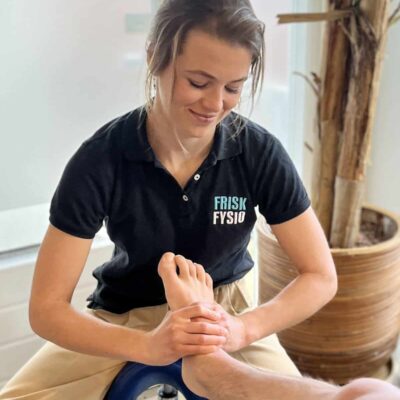
Foot complaints
Do you know how many bones, joints, muscles and ligaments there are in your foot? There are actually a great many! The foot has a very complex structure, thanks to the way the bones, joints, muscles and ligaments work together. It is this complex structure that enables your foot to provide stability and shock absorption.
- Heel spur
- Osteoarthritis
- Bone fracture
- Hammer toe or claw toe
- Achilles tendonitis
- clubfoot
- Hollow foot / flat foot
Ankle complaints
Ankle problems can occur when you make an unusual or unnatural movement with your ankle and the muscles are unable to absorb the impact, leaving the tendons to bear the full force. But what are the most common ankle problems?
- A sprained ankle
- A sprained ankle
- A bone fracture
- Osteoarthritis
- Overuse of tendons
Are your symptoms persisting, are you unsure about your condition, or are you finding the pain unbearable? Book an appointment at FRISKFYSIO Amstelveen and we’ll be happy to help you get rid of your symptoms or provide you with appropriate advice. Even if your symptoms keep coming back, it’s important to get in touch with us! This often enables us to prevent your symptoms from getting worse.
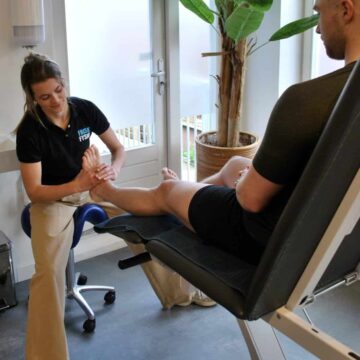
What can FRISKFYSIO Amstelveen do for you?
Have you sprained your ankle? Elevate your foot and try to move and walk carefully, as far as the pain allows. Applying cold can relieve the symptoms; always wrap ice or a cold pack in a cloth. Are you unable to stand on your foot properly or take more than four steps without help? Call your GP or the GP out-of-hours service. Also contact your GP if the pain and swelling do not subside after four days. Read more at Home doctor.co.uk.
Have you been experiencing pain in your ankle and/or foot for some time? If so, keep a close eye on it! What may seem minor at first can quickly turn into a serious injury! Take some rest, but do continue to exercise (in moderation). It’s also important to do exercises that strengthen your muscles.
During your first appointment at FRISKFYSIO Amstelveen, you will undergo a consultation and a thorough assessment, and one of our professionals will analyse your symptoms. Based on the results, we will determine which treatment is best suited to your condition(s). We will then draw up a clear treatment plan together, and you will be given some exercises to do at home, which you can access online or via our FRISK App.
APPOINTMENTS AND CONTACT DETAILS
An appointment at FRISKFYSIO Amstelveen
Do you have any questions about treatment for ankle and foot problems, or would you like to book an appointment? Please get in touch with our team or use the online booking tool.
QUESTIONS ABOUT YOUR TREATMENT
Frequently asked questions about ankle and foot problems
Click on a question to read the answer.
Call your GP or the GP out-of-hours service if the pain prevents you from standing on your foot or taking more than four steps without assistance. You should also make an appointment if the pain and swelling have not subsided after four days.
Try to move and walk carefully, as far as you are able. Build up the strain gradually. If the pain gets much worse when you walk, stop and try again later.
If your ankle remains unstable, you sprain it again, or you are unable to do the exercises on your own, supervised exercise therapy may be appropriate. Discuss which exercises and progression plan are suitable for your work or sport.
Start once you can stand and walk without too much pain and the exercises cause little or no residual pain. Build up your training gradually before resuming competitions. The pace of recovery varies depending on the injury.
No. A brace or tape can sometimes provide extra support. Discuss the pros and cons, and how this fits in with exercise and physical activity, with your GP or physiotherapist.
We will discuss where you are experiencing pain and what you find difficult when standing, walking, working or exercising. Following an examination, we will discuss the findings and draw up a suitable plan. Please bring any relevant information about previous injuries or treatments with you.
If exercises are part of your treatment, you will be given instructions on how to perform them and how to structure your programme. On this page, you can also find out how to view your exercise programme online or via the FRISK App.

