Do you think scoliosis only affects children? That is a common misconception. A lateral curvature of the spine can also cause symptoms in adulthood. You may notice that your back tires more quickly, that you stand crookedly, or that pain is becoming more frequent. Sometimes the curvature has been present for years; sometimes it develops gradually due to wear and tear or prolonged strain. Whatever the cause, scoliosis can increasingly affect your daily life without you even realising it. In this blog, you’ll discover which symptoms of scoliosis are common in adults, when you should be on the lookout, and what you can do to reduce or prevent symptoms.
What is scoliosis in adults?
At scoliosis The spine is not straight, but curves. This can cause the shoulders or hips to be misaligned and lead to uneven strain on muscles and joints. With scoliosis symptoms in adults, we often see that complaints develop gradually. For example, you may notice that your back tires more quickly or that one side of your body feels more tense. Because these changes occur slowly, they are often attributed to age, stress or a sedentary job.
Symptoms of scoliosis in adults that you should take seriously
Symptoms vary from person to person, but many adults recognise one or more of the following signs:
- persistent back pain or neck pain
- a nagging, tired feeling in the lower back
- stiffness when standing up or after sitting for a long time
- misalignment of shoulders or pelvis
- radiation to buttock or leg
- shortness of breath with greater curvature
These symptoms may be mild at first, but often increase when the underlying cause is not addressed.
What happens if you do nothing?
If scoliosis is left untreated, the strain on your spine may increase. Muscles become overloaded, joints wear out more quickly and pain becomes more persistent. You may find that everyday activities such as walking, working or exercising require more and more energy.
Some people imperceptibly adjust their posture to avoid pain. This creates a vicious cycle of tension and compensation, causing symptoms to spread to neck, shoulders or hips.
Timely counselling can often slow or even reverse this development.
What physiotherapy can do for you
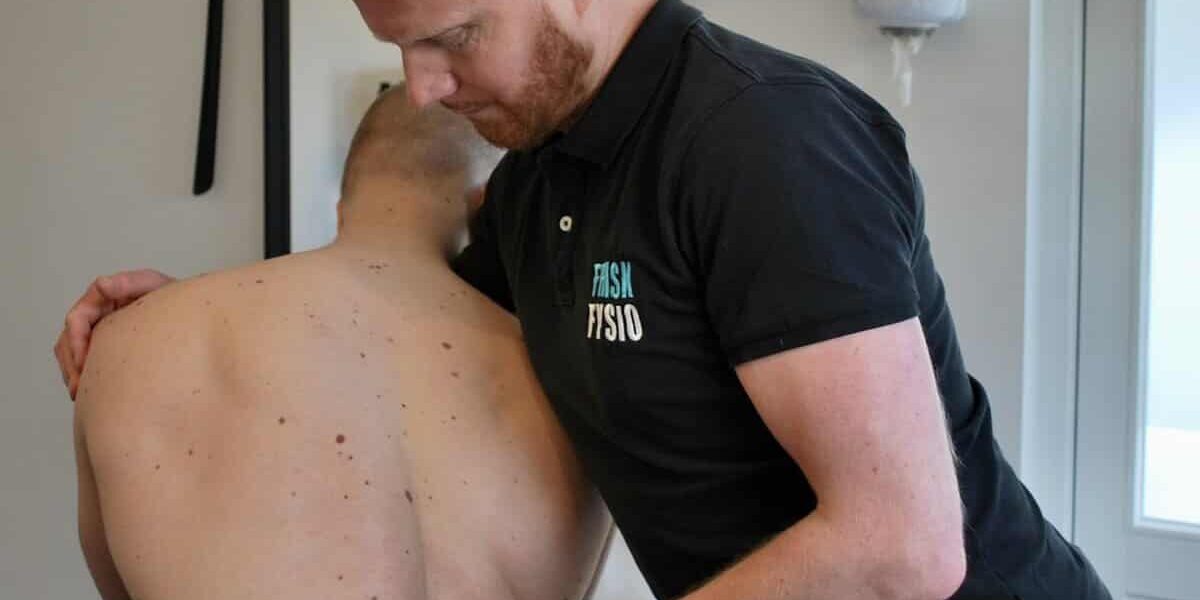
When it comes to scoliosis, we don’t just look at the curvature itself, but above all at how your body copes with it. During an initial consultation, we analyse your posture, muscle balance and movement patterns. Based on this, we draw up a personalised treatment plan.
Through targeted exercises, we improve stability and muscle strength, reduce strain and work towards a more relaxed and efficient posture. You will also receive practical advice for work, sport and everyday activity.
The aim is clear: less pain, greater control over your body and preventing symptoms from getting worse.
Don't dwell on doubt for too long
Do you recognise any of the symptoms of scoliosis in adults described here? If so, don’t wait until the symptoms get worse. The sooner you understand your situation, the better you can influence your recovery.
Would you like to know whether your back pain is related to scoliosis and what you can do about it? Please feel free to contact on with our practice by calling 085-5000333 or e-mail to info@friskfysio.nl. Together, we’ll look at an approach that suits your body and your lifestyle.