Breast pain

Chest pain: when should you call?

Call 112 if you experience chest pain or severe chest tightness that does not go away at rest, particularly if accompanied by sweating, nausea or shortness of breath. Call your GP or the GP out-of-hours service immediately if you have difficulty breathing or a persistently very rapid heartbeat.

Chest pain can be worrying. You may notice the pain when you move, cough or carry out everyday activities. It is understandable that you want to know what is causing the symptoms and what you can safely do.

Chest pain can have various causes, including the heart, lungs, muscles, ribs, stomach or oesophagus. Stress can also play a part. The location or nature of the pain alone is not enough to determine the cause.

Do you often experience chest pain and are unsure of the cause? If so, make an appointment with your GP. Physiotherapy may be appropriate for muscle or joint problems, once serious causes have been ruled out.

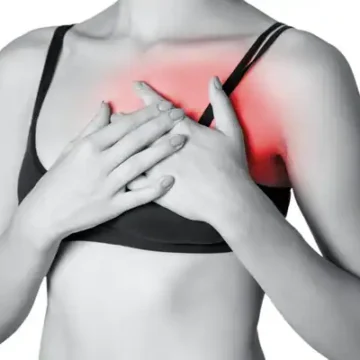
A person with a hand on their chest

What symptoms can you describe?

Tell your doctor when the pain started, what it feels like and what you were doing at the time. For example:

  • Pain or pressure at rest or during exercise.
  • Pain when coughing, taking a deep breath or making a certain movement.
  • An area that is tender to the touch or when lying down.
  • Additional symptoms such as shortness of breath, sweating, nausea or fever.

Muscles, ribs and the chest

The muscles around the chest may be tender after prolonged coughing or strenuous exercise. Sometimes the cartilage near the sternum is painful, as in Tietze’s syndrome. Have the cause assessed before assuming that the pain is coming from the muscles or ribs.

Has your doctor diagnosed you with Tietze’s syndrome? You can usually carry on exercising, even if it is sometimes painful. Discuss which activities are suitable for your situation. You can find more information at Thuisarts.nl on Tietze’s disease.

Has your chest pain been assessed by a doctor, and is supervised exercise appropriate? At FRISKFYSIO Amstelveen, we’ll discuss your questions and exercise options. Please have any new or significantly changing symptoms reassessed by your doctor.

A woman with both hands on her chest; the chest area is marked in red

What will we discuss at your first appointment?

We will listen to your story and ask what assessments have already been carried out. We will also discuss how your symptoms are affecting your work, sleep, exercise and daily activities. You can tell us which movements you avoid and what you are unsure about.

  • Your symptoms, how they have progressed, and your doctor’s advice.
  • The movements and activities that you find difficult.
  • Your personal goals and questions about exercise.
  • An appropriate approach and opportunities to discuss progress.

If physiotherapy is suitable for your symptoms, we will draw up a plan together, including an explanation and appropriate exercises. You will have the opportunity to ask any questions. Further information on the causes and when you should ring can be found at Thuisarts.nl on chest pain.

APPOINTMENTS AND CONTACT DETAILS

An appointment at FRISKFYSIO Amstelveen

Do you have any questions about support for breast pain, or would you like to make an appointment? Please get in touch with our team or use the online booking tool.

QUESTIONS ABOUT YOUR TREATMENT

Frequently asked questions about breast pain

Click on a question to read the answer.

Call 112 if you experience chest pain or severe pressure that persists even at rest, particularly if accompanied by sweating, nausea, radiating pain or shortness of breath. Do not wait for an appointment with a physiotherapist.

Yes. Seek medical advice if you experience new or unexplained chest pain. Contact your GP or the GP out-of-hours service immediately if you find it difficult or painful to breathe, or if your heart is beating very fast.

That is possible, but chest pain can also have other causes, including heart or lung problems. The location of the pain alone does not provide any certainty in this regard.

If the symptoms are related to movement, muscles or ribs, physiotherapy can sometimes help. First, it must be clear that no medical assessment or other care is required.

We will ask you about when your symptoms started and how they have progressed, as well as your general health and daily activities. Please bring any information from your GP or specialist with you, if you have any.

If exercise is appropriate, your physiotherapist will discuss which exercises and levels of exertion are suitable. You will receive your personalised programme via the FRISK App.

Yes. Please contact FRISKFYSIO Amstelveen to discuss your enquiry. If you are experiencing acute chest pain, please follow the emergency advice given above.